Welcome to my Shumpoton blog! I write my blog in the Udmurt language, and Shumpoton means ‘joy’. Udmurt is a Finno-Ugric language spoken in Russia, Southwest of the Ural Mountains. Today, about 324,000 people speak Udmurt as their native language, but the number of speakers is declining rapidly. Udmurt is my native language. As a child and teenager, I loved writing in my native language, but after finishing school, I barely wrote anything in Udmurt and switched entirely to Russian.
In 2010, I moved to Finland, and my children were born here. My French husband and I decided to speak to our children in our respective languages—he spoke French, and I spoke Udmurt. As they grew, I felt a strong need to express myself in my native language. I started writing my thoughts in Udmurt on paper, often about feelings. I decided to share my thoughts, experiences, and knowledge through a blog. I feel joy and happiness when I write in my native language!
In my blog, I write about topics that interest me. I am a linguist, and languages are a central focus of my interest. For example, I am fascinated by how different languages describe the world of emotions, how speakers perceive the world through the languages of Indigenous peoples, how linguistic variation and writing style can revitalize a language, and so on.
I am interested in how people with Indigenous backgrounds navigate the modern world and life in big cities. I have started interviewing Udmurt women living in big cities in different parts of the world and published some of the interviews in this blog.
I create stories for my children. I tell the stories to my children first, and then they are published here.
In my blog, I also write down my favorite recipes and about the places I have visited.
I create voice recordings of some blog posts. Many Udmurt-speaking people cannot read in their native language because they haven’t studied it in school. Udmurt language education as a mother tongue is very limited, and Russian is used as the language of instruction in schools. Audio posts can help people learn to read and practice Udmurt.
Some of my posts are written in Russian. Unfortunately, there is very little awareness in Russia about languages other than Russian, even though around 150 different languages are spoken in the country. In my blog posts, I emphasize that Russia’s other languages are an important part of the country’s society and culture.
I am also planning to translate some texts into English. All references to English-language texts will appear at the bottom of this page.
In 2020, I received a grant from the Kone Foundation, and at the beginning of 2021, I wrote my blog with the support of the grant! I am grateful to the Kone Foundation for allowing me to work on my dream project!
Who am I
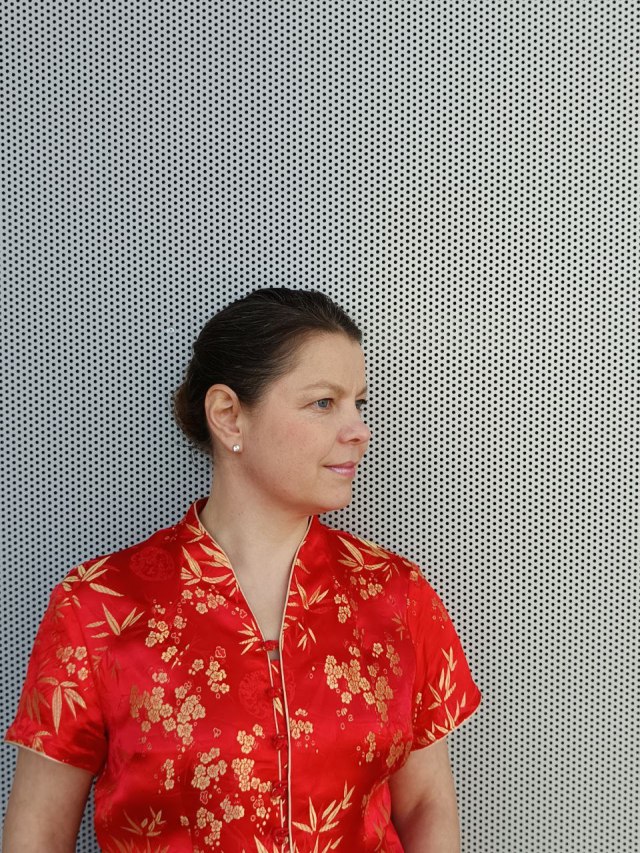
Picture Syanda Iaptik.
My name is Svetlana Edygarova. I was born in the Soviet Union in the traditional Udmurt village of Gondyrvaj and grew up in a village called Poroz (gondyrvaj means ‘bear branch’, and poroz means ‘bull’). After completing secondary school in Poroz, I moved to the capital of Udmurtia, Izhevsk, to study at a humanitarian high school. During high school, I was introduced to the field of Finno-Ugric languages, and from that time onward, I have been fascinated by these languages.
Toward the end of high school, I wanted to study film directing in the city of Perm, but in 1998, a financial crisis began in Russia, and I stayed in Izhevsk to study Udmurt philology at Udmurt State University. There, I also had the opportunity to study Finnish language, and in 2004, I graduated as a teacher of Udmurt language and literature.
At the same time, I was an activist for Udmurt language and culture and organized many events and summer schools for Finno-Ugric schoolchildren, students, and artists. I have also been involved in many other activities.
In 2005, I received a grant from the Estonian Kindred Peoples Program (Hõimurahvaste programm) and went to the University of Tartu as a doctoral student. There, I became a linguist. I studied the morphosyntax of the Udmurt language, and in 2010, I defended my dissertation on The Possessive Category in Udmurt.
Since 2011, I have been a postdoctoral researcher at the University of Helsinki, where I have studied linguistic variation, language culture, and, most recently, language ideologies in the Permic languages (Udmurt, Komi, and Komi-Permyak).
Currently, I live with my family in Helsinki.
 Shumpoton